Interest Rates
Longer Term Concerns About U.S. Debt And Deficit

A mountain of new debt, a balloon of short term borrowing due near term, and the likelihood of higher interest rates are big hurdles.
Longer Term Concerns About U.S. Debt And Deficit

A mountain of new debt, a balloon of short term borrowing due near term, and the likelihood of higher interest rates are big hurdles. Moody’s says U.S. debt could test its AAA rating.
Longer Term Concerns About U.S. Debt And Deficit

A mountain of new debt, a balloon of short term borrowing due near term, and the likelihood of higher interest rates are big hurdles. Moody’s says U.S. debt could test its AAA rating.
Longer Term Concerns About U.S. Debt And Deficit

A mountain of new debt, a balloon of short term borrowing due near term, and the likelihood of higher interest rates are big hurdles. Moody’s says U.S. debt could test its AAA rating.
Interest Rate Moves And Stock Prices… Another Look
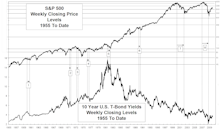
At times it is indeed possible to have interest rates rise and stocks also move higher, and it is also possible to have rates decline and stocks fall.
Using A Few Bear Arguments To Make A Bullish Case
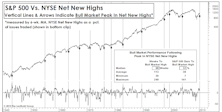
Doug Ramsey utilizes several bear market arguments to build a bullish case. Rising Interest Rates, Overbought Market, Low Volatility, and Low Trading Volumes, can all be looked upon in a BULLISH light.
Longer Term Concerns About U.S. Debt And Deficit

We continue to have longer term concerns about U.S. debt and deficit. The mountain of debt is building and interest expense rising.
Inflation Understated Not Overstated

There is political pressure to keep inflation low, minimizing COLA (cost of living adjustments) and Social Security costs. Low inflation also helps to keep interest rates down, which keeps government interest payments as low as possible.
Inflation Understated Not Overstated

We believe that the CPI understates, not overstates inflation.
Inflation Understated Not Overstated

We believe that the CPI understates, not overstates inflation. There is political pressure to keep inflation low.
2008: Less Than Great

Yes, it is thermal pollution time again. It’s the new year when prognosticators and investment pundits produce large volumes of hot air, probably contributing to global warming.
2007 Outlook

CPI Accelerating In Q4, Economy Creeping Along, But Expect Recession In 2008
2007 OUTLOOK: CPI Accelerating In Q4, Economy Creeping Along, But Expect Recession In 2008

Expect economy to slow the remainder of 2007 as a result of slower consumer and business spending, as well as housing and auto woes. A 2008 recession is now a stronger possibility.
Rate Cuts Fanning The Commodity Flames

Fed rate cuts not reaching intended targets. Commodity groups caught fire after the initial August 17th cut and continue to be strong. Meanwhile financial institutions and consumer related groups continue to languish.
CPI “Housing” Cooling Off

One development that is currently dampening rent hikes is the increasing conversion of condo units to rental units, increasing the overall supply of rentals.
2007 Outlook: CPI Accelerating In Q4, Economy Creeping Along, But Recession In 2008?

Expect economy to slow the remainder of 2007, as a result of slower consumer spending as well as housing and auto woes. A 2008 recession is now a strong possibility.
2007 OUTLOOK: CPI Accelerating In Second Half, Economy Creeping Along, Recession In 2008?

Bond market targets were increased in July, based on rising global rates, strong global economy and expected inflation acceleration.
2007 OUTLOOK: CPI Accelerating In Q4, Economy Creeping Along, But Expect Recession In 2008?

Expect economic expansion to pick up a bit after weak first quarter, but a 2008 recession is a possibility.
View From The North Country

2007 half time report. Revisiting our original 2007 projections with some current modifications. Outlook for stock market, interest rates, inflation, profits, economy, the deficits, the U.S. dollar and gold.
Interest Rates And Stock Valuations: A Broken Linkage?
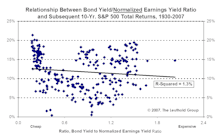
A look at the relationship between bond and stock yields as justification for today’s expectations of a continued bull market and for the current LBO craze. No evidence that Fed-type valuation models help forecast future market returns.
Perception for the Professional
March 2026 Issue

Featured Articles
Sector Navigator
March 2026 Issue