S&P 500
U.S. Stocks: What If The New Decade Is “Normal”?
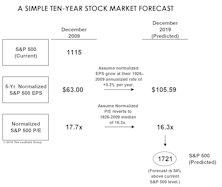
While most are content to make annual predictions at this time, leave it to Doug Ramsey to bite off an even bigger piece…predicting the next DECADE.
2009: Not Monotony, But Close

The 2008 worst performers shot to the head of the class in 2009. History however shows it doesn’t usually pay to buy the prior year’s laggards in hopes of hitting it big the next year.
Symptoms of a Maturing Bull Market—Assessing Potential Remaining Upside

In this month’s “Of Special Interest”, Eric and Doug put the current market in historical context. They use a variety of factors to assess the potential for further upside.
Good News Is Here… Now What?
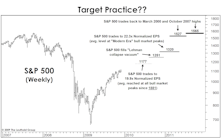
Climbing the bull market stairs. Our initial upside price target for the S&P 500 is 1300 to 1350. This is based on normalized P/E ratios moving to prior bull market average peak levels, as well as on past market peaks.
Revisiting An Analogue For Today’s Market

Current market is closely aligned with the 1973-1974 post bear market recovery. Expect to see series of higher lows before market ultimately makes new high.
Lehman Remembered
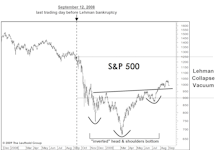
Market vacuum occurred during the 4 weeks following the collapse of Lehman Brothers, when the S&P 500 dove from 1250 to 900. This occurred during the recession, but it has been the Retailers that are among the few groups that have closed that gap.
Taking A Closer Look At S&P 500 Valuations

Valuation metrics using S&P 500 aggregate earnings can be skewed by large losses. Building a profile of valuations by looking at median valuations, or the distribution of valuations, can be helpful to avoid this problem.
Is There Any Perspective For Today’s Stock Market?
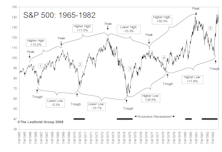
Eric Bjorgen searches for something beyond The Great Depression or 1990’s Japan. See what he found in this month’s Of Special Interest.
The U.S. Is Leading The Foreign Markets, But For How Long?
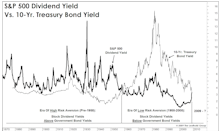
· The U.S. is leading the foreign markets, but for how long?
Deflation… What If? (Part II)

Once again, this month’s “Of Special Interest” examines deflation but employs a longer time horizon. We also contrast the deflationary environment in Japan versus current U.S. conditions.
Deflation….What If?

Mild deflation is nothing to fear: An environment of 0% to 2.4% deflation has proven to be one of the more conducive environments for stocks.

Major Trend Edges Up To Neutral In April

Major Trend Index improved to Neutral in early April and clinging there now. Are we seeing a delayed bear market rally? Examining what could come next.
All Was Not Lost In Stocks' Lost Decade
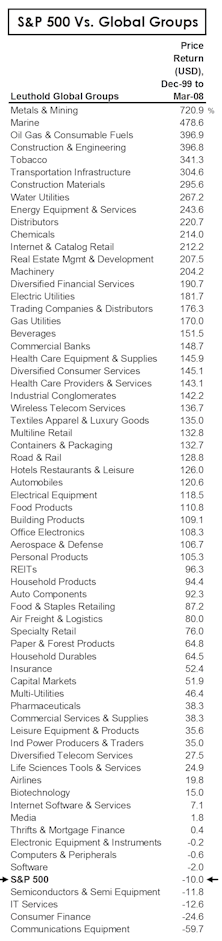
There’s much more to “the market” than the S&P 500.
Correlation In All The Wrong Places
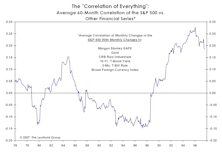
Many quantitative factors, which had previously shown little correlation, suddenly all moved together.
New S&P 500 Highs? It Depends On What's In Your Wallet...

Yes, the S&P 500 is near all time highs, but what if the index was denominated in other currencies? Denominated in euros, the S&P 500 is still 30% below its March 2000 high.
Weighted Versus Unweighted: Inside The S&P 500
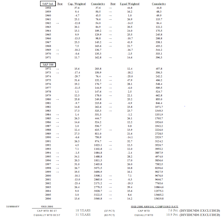
In 2006, the capitalization weighted S&P 500 was up 13.6%, excluding dividends. The average return for the 500 stocks (S&P equally weighted) was up 14.2%.
Some Erosion - But Not A Collapse - In The Wall Of Worry
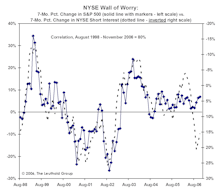
The surprising restraint in investor enthusiasm has been a key pillar behind our bullish case for the stock market.
Why It Has Been Tough To Beat The S&P 500 In 2006

This month’s “Of Special Interest” study presents a handful of factors that explain why life for active managers has been much more difficult in 2006.
Market Action After Last Fed Rate Increase

Study of stock market performance following last Fed interest rate hikes indicates no correlation to future stock performance. Investors expecting a big surge based on this being the last hike may be disappointed.
Perception for the Professional
March 2026 Issue

Featured Articles
Sector Navigator
March 2026 Issue