Bonds
Bonds: Not A Four-Letter Word
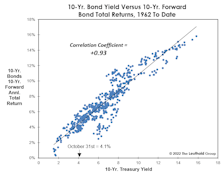
The bond market bubble has popped, and forward-looking Treasury returns are no longer a disaster. We aren’t suggesting one pile into them with yields near 4% and inflation around 8%, but we think they have suffered a much more substantial de-rating than large-cap stocks.
The World Of Emerging Market Bonds
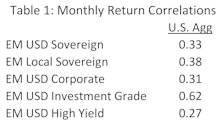
Investors looking to diversify away from the U.S. interest rate environment and/or the domestic business cycle may wish to consider Emerging Market bonds, an asset class with lower correlations to the U.S. Agg. Bond Index. EM bond investors can choose between several investment attributes to find the risk / return profile with which they are most comfortable. This study surveys the investment tradeoffs offered by each sub-category, as defined by ETFs focused on each particular asset class.
Research Preview: Emerging Market Bonds
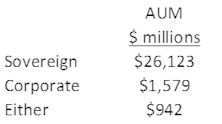
The U.S. Aggregate Bond Index lost 3.8% in April, bringing its year-to-date return to an agonizing -9.5%. The realization that bonds can lose big money, combined with the outlook for stubbornly high inflation and continued rate increases, is nudging bond investors to consider a wider scope of alternatives.
Investment Grade Widened More Than High Yield: Implications & More

As credit spreads widened, something rather unusual happened: investment grade Corporate bonds performed far worse than High Yield bonds.
Bond Market Partially Closed For The Holidays
To use the old cliche' for lack of a better term, the bond market backed and filled in December.
Bonds, Breadth, And Leadership: A Simple Model

Hard-core statisticians might be disappointed to learn that the 140-ish inputs in our Major Trend Index (MTI)aren’t entirely “independent and uncorrelated.”

Bond Bubble Spills Into Equities
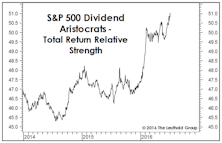
The S&P 500 once again remains on the verge of a new bull market high, thanks in large part to the bubble in another asset class: Bonds.

Millions Of Citizens Become “One-Percenters…”

While the collapse of Swiss government bond yields into negative territory was January’s bond market stunner, our “G7” composite 10-year government bond yield reached its own milestone when it closed the month below 1.0% for the first time in post-WWII history.

U.S. Bonds
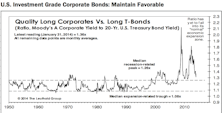
Given the higher volatility and increased risk aversion, high grade credits are attractive as the negative relationship between rates and credit spreads dampens the volatility of this asset class.
U.S. Bonds
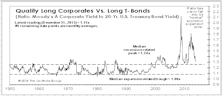
The thin liquidity likely magnified the move in both rates and credit spreads, but we continue seeing a friendly macro environment that supports high quality credits.
Exploring The Historical Relationship Between Stock And Bond Returns: An Update
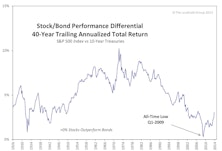
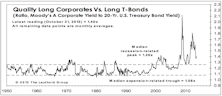
We were surprised to see that all differentials ten years and longer are still below their respective 1926-to-date medians, indicating they still have the potential to keep moving towards historical median levels. We expect stocks to outperform bonds going forward.
US Bond Grades
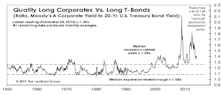
The renewed participation of credits in the risk asset rally is a welcome sign.
US Bond Market - October 2013
We are encouraged by the narrower spreads in October as the feared divergence between credits and equity markets did not continue.
Our Position on U.S. Bonds
U.S. Investment Grade Corporate Bonds: Favorable, U.S. High Yield Corporate Bonds: Neutral, U.S. Municipal Bonds: Neutral
U.S. High Yield Corporate Bonds: Maintain Neutral
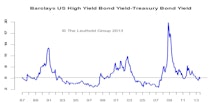
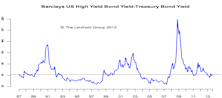
On the positive side, the fundamental picture is still healthy for most U.S. high yield issuers, and defaults are expected to be low. On the negative side, weakening inflation expectations is a divergence that bears close monitoring. We will exercise patience and wait for a better entry point.
U.S. Investment Grade Corporate Bonds: Maintain Favorable
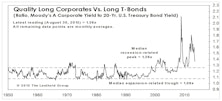
This is consistent with our overall cautious view on credits. Credit spreads continued narrowing despite higher volatility in the bond markets.
Perception for the Professional
March 2026 Issue

Featured Articles
Sector Navigator
March 2026 Issue