Articles by Chun Wang Director of Multi-Asset Strategies
Interest Rates And Credits: At A Crossroads

The U.S. 10-year yield looks ready to re-test the ceiling of the previous downtrend...The recent weakness in oil prices brought back some very unpleasant memories from 2014. Implications for breakeven rates and credits are not so sanguine...We are at a crossroads and a cautious stance is warranted.
Time Cycle Mid-Year Update: Going Off Script?

Divergences have emerged: countries on a tightening path (e.g. US and UK) were more or less on track until June; while countries on an easing path (e.g. Germany, Japan, & Australia) went off script, as policy trumped historical patterns.
Risk Aversion Index—Increased But Stayed On “Lower Risk” Signal

However, we recommend a defensive bias within the fixed income space for the time being.
US Bonds
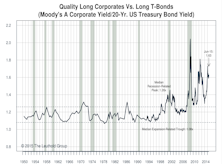
Net outflows continued as the cushion from credit spreads is still inadequate...So far risk contagion from the Puerto Rican bond default has not been an issue. Munis still look attractive relative to Treasuries, and investment grade Corporates...The improvement in credit markets and inflation expectations looks more shaky as oil prices broke below the recent tight range and uncertainty around Greece adds to the overall risk aversion. We reduced these bonds to Unfavorable.
Navigating The First Rate Hike
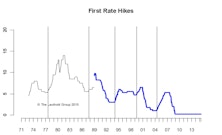
Our current view is the lift-off will be December or later. Assuming inflation will pick up and the Fed hikes the rate by the end of 2015, stocks will perform relatively well, with international stocks a better bet than U.S. stocks.
Inflation—More Patience Please
The overall global inflation picture took a small step back as both developed and emerging countries reported below-consensus inflation numbers. More patience is needed as the picture on the wage inflation front is also mixed. We continue to look for an upturn in the PPI in the rest of the year.
U.S. 10-Year: Not All In Sync
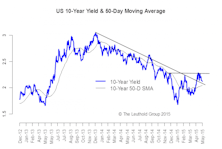
· The higher-highs/higher-lows pattern since the 10-year yield trough in January is encouraging but the bigger test is the 225-230 area.
Steeper Yield Curve: All About Inflation

The steepening move in the yield curve is prevalent across many countries and is primarily driven by higher inflation expectations.
Risk Aversion Index—Stayed On “Lower Risk” Signal

While we acknowledge the volatile market environment, we still favor credits within the fixed income space.
End Of The QE Trade? Too Early To Call

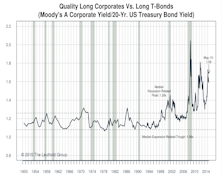
The common driver behind the sharp reversal of many recent asset class trends is the unwinding of the ECB QE trade.
Risk Aversion Index Fell Sharply, Generated A New “Lower Risk” Signal
Favor credits within fixed income in the near term but beware of volatility ahead
Inflation - Patience Still Needed
The stabilization in energy prices and overall CPI is encouraging. The disappointing inflation picture has prompted swift and dramatic central bank actions around the world this year. We expect limited downside to inflation at producers’ level and we believe an upturn in the PPI is not too far away. Patience is needed.
U.S. 10-Year: Many Reasons To Be Patient
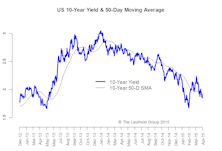
From a price action perspective, the drop below the 50-day moving average and the failed higher-high, higher-low pattern are not supportive of an imminent up-turn in interest rates.
RAI Ticked Up And Stayed On “Higher Risk” Signal

We recommend staying cautious and exercising patience in the near term.
Inflation - Patience Needed
Inflation - Patience Needed
We are still seeing more disinflationary than inflationary pressure so patience is needed. The disappointing inflation picture is consistent around the world, with both developed and emerging countries undershooting inflation targets. Inflation at producers’ level has more downside too in the near future.
U.S. 10-Year: Looking For A Follow-Through
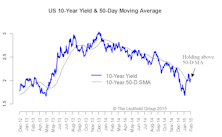
This is the first time in the last year or so the 10-year yield has broken through, re-tested, and held above the 50-day moving average.
Inflation & Monetary Policy—A Feedback Loop

Inflation and inflation expectations are key inputs to central banks’ policy decision process. Divergent policies have very different impacts on inflation.
Perception for the Professional
March 2026 Issue

Featured Articles
Sector Navigator
March 2026 Issue