Articles by Chun Wang Director of Multi-Asset Strategies
Risk Aversion Index - Stayed On “Lower Risk” Signal

Fewer uncertainties surrounding the Fed’s policy decision probably helped, but the renewed sell-off in oil is a big concern for all credit classes. We recommend caution and a neutral stance towards credits at this juncture.

Inflation In Line With Expectations

Inflation met expectations in October. Overall inflation not under-shooting expectations is likely to give the Fed some comfort when it decides on the rate hike in December. Various wage inflation measures show some promise but we will be patient and wait for confirmation.
A December Hike Likely

Our interpretation of the current Fed stance is that it has shifted from “hike if the data and the market support” to “hike unless the data and the market perform poorly.”
Party Like It's 1998? One Big Caveat

Based on the four key features of the current macro environment: global disinflation, monetary conditions divergence, an extended bull market, and sub-par economic performance, 1998 ticks all the boxes.
Risk Aversion Index— A New “Lower Risk” Signal

We are moving to a more constructive stance towards credits within the Fixed Income space.
Disinflation Is Still Dominant

Inflation met or slightly beat expectations in September. We are watching the oil prices and the dollar closely for signs that the disinflationary headwind might be dying down.
Three Ds Are Ruining The Fed’s Little Plan

There are three Ds that are ruining the Fed’s little rate hike plan: the Dollar, Disinflation, and the Decline in wealth effect.
Risk Aversion Index— Moved Higher, Stayed On “Higher Risk” Signal

It’s too early to move back into credits; we recommend a defensive stance within the Fixed Income space.

Disinflation Is Here To Stay

Longer term drivers of inflation, such as velocity of money, capacity utilization, wage inflation, all suggest disinflation is here to stay. It’s still too early to call the bottom in oil prices so we continue to expect weaker producers’ inflation ahead.
Three Questions & One Answer: From Divergence To Convergence

1) Why The Big Sell-Off In Stocks? 2) Why Didn’t Interest Rates Go Lower? 3) Why Was The Dollar Weaker?
Risk Aversion Index— Moved Higher, Stayed On “Higher Risk” Signal

We expect volatility to persist in the near term as the market deals with uncertainties surrounding the Fed rate hike decision and China. A defensive stance is recommended within the fixed income space.

Inflation - It Will Get Worse

The current inflation numbers are not yet reflective of the recent sell off in oil prices so we expect even weaker inflation going forward.
Re-Deflation: Lower Rates, Wider Spreads

Re-deflation is the period where reflation gives way to deflation or disinflation. It has been so prevalent that it triggered a new “Higher Risk” signal in our Risk Aversion Index.
Re-Deflation—RAI Flashes New “Higher Risk” Signal

The re-deflation theme has been so prevalent that it triggered a new “Higher Risk” signal in our Risk Aversion Index. There are significant negative implications for all risky assets.

Inflation—Expecting More Drag From Oil
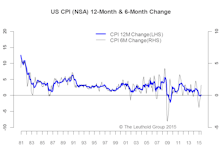
With the recent weakness in oil prices and the renewed strength of the U.S. dollar, we would not be surprised to see weaker headline numbers in the next few months. The expectations of a rate hike might actually end up pushing the rate hike further out. We are now less sanguine about a pick-up in PPI in the rest of the year.
Perception for the Professional
March 2026 Issue

Featured Articles
Sector Navigator
March 2026 Issue