Articles by Chun Wang Director of Multi-Asset Strategies
Yield Curve Steepening—Stalling But Trend Intact

Given the beginning of an easing cycle in September and the Trump Trade in October, the lack of steepening in the yield curve is intriguing. While tighter financial conditions are likely a challenge to the steepening move, policy regimes and the term premium are favorable toward further curve steepening.
Inflation—Warmer Prints But Muted Reactions
.png?fit=fillmax&w=222&bg=FFFFFF)
The latest CPI report was a tad higher than consensus. Our scorecard shows the trend of disinflation stays intact.
Risk Aversion Index: Maintaining Its “Higher-Risk” Signal

Our Risk Aversion Index edged lower but stayed on the “Higher-Risk” signal.
U.S. Election Study Update

Our assessment shows that “who” wins the White House does not seem to matter that much to most major asset classes. Nevertheless, we believe a strong dose of caution against political and/or geopolitical risk is prudent.
China’s “Whatever It Takes” Moment—“Believe Me, It Will Be Enough”

Market reaction to the latest flood of monetary and fiscal stimuli has been spectacular. While conviction about Beijing’s attempts to revive its flagging economy has been severely lacking, this time we should believe it. It’s certainly the right medicine China needs and the spark of confidence these actions will ignite should not be underestimated.
Risk Aversion Index: Maintaining Its “Higher-Risk” Signal

Election and geopolitical risks are far from being adequately priced in, while the current market pricing of Fed rate cuts is too aggressive.
Anatomy Of An Easing Cycle
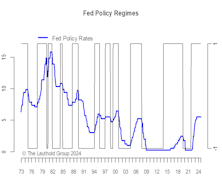
The economy normally fades heading into a series of rate cuts, with higher unemployment and lessening CPI inflation. Risky assets (stocks and credit) do well, and bond yields move lower. Real assets also benefit (gold in particular). On the whole, an easing cycle is favorable for most assets.
Modest Disinflation Continues
.png?fit=fillmax&w=222&bg=FFFFFF)
The latest CPI report was in line with consensus. Our scorecard suggests that the modest disinflationary regime continues.
Three Themes To Watch: Recession, Inflation, The Election
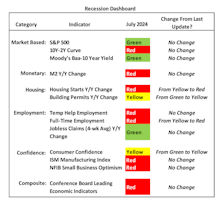
Is the market overreacting to recent economic data? Concerns about a growth slowdown are replacing the optimistic outlook of early 2024. Our Recession Dashboard shows increased risks, with notable declines in housing, employment, and consumer confidence. Despite this, equity and credit markets remain resilient. As we navigate these uncertain times, discover how upcoming elections and potential economic policies could shape the future.
Modest Disinflation
.png?fit=fillmax&w=222&bg=FFFFFF)
The latest CPI report was a tad cooler than consensus. Our scorecard suggests the modest disinflationary regime is likely to persist.
Risk Aversion Index: A New “Higher-Risk” Signal

The first U.S. presidential debate brought the election risk front and center.
The Current State Of Value—An Update
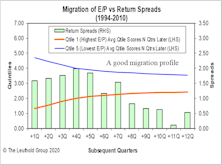
Value’s migration behavior was the key to its failure between 2010-2020—its pattern got progressively worse, culminating in a Value trap during 2017-2020. We believe macro tailwinds and positive surprises are both needed, and, while the setup on the macro front, post-2020, has become quite favorable, in order to breathe more life into Value we need to see the upswing in earnings surprises continue.
Risk Aversion Index: Stayed On “Lower-Risk” Signal

Economic numbers will likely continue to cool a bit, but more election-year policy measures will be forthcoming in the next few months, cushioning the downside for the economy.
Golden Intrigues
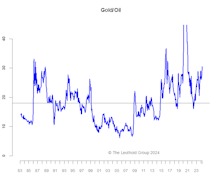
Chinese investors have flocked to gold as traditional investments have massively disappointed. Global central banks are also buying gold amid heightened geopolitical tension. Both trends help explain why gold has defied the gravitational pull of a stronger dollar and higher real yields.
Inflation—Boring Is Good
.png?fit=fillmax&w=222&bg=FFFFFF)
The latest CPI report was boring, but no bad surprise is really good news these days. Our scorecard is currently Neutral and it’s likely on the cusp of turning disinflationary over the next few months.
Risk Aversion Index: Stayed On “Lower-Risk” Signal

The repricing of Fed cuts has largely run its course, removing one big negative from the market.
$Yen No Mountain High Enough?

One casualty of the U.S. market’s hawkish turn is the Japanese Yen. It certainly grabbed its share of headlines, yet, when viewing the selloff in historical perspective, this year’s uptick looks entirely inconsequential. Additionally, when considering the Yen through the lens of other Asian currencies, its outsized weakness versus the dollar essentially disappears. Dollar strength is the real driver and it has pummeled Asian currencies across the board.
Inflation—Overreacting Much?
.png?fit=fillmax&w=222&bg=FFFFFF)
CPI readings were a touch above estimates again in March. The actual data surprises are not nearly as dramatic as the market reactions, which have been almost entirely driven by sentiment swings.
Risk Aversion Index: Stayed On “Lower-Risk” Signal

The U.S. economy is likely to benefit from all the election-year policy measures yet to come.
First BoJ Rate Hike In 17 Years—Not So Virtuous After All

To gauge how much faith we should have in this “virtuous” cycle, we examine the macro context in terms of the business cycle, the Yen, interest rates, and inflation. Ultimately, inflation holds the key to bond yields, as the main difference between pre- and post-1990 rate hikes boils down to inflation—which is also the key determinant of how far the BoJ can go in this tightening cycle.
Perception for the Professional
March 2026 Issue

Featured Articles
Sector Navigator
March 2026 Issue