Articles by Chun Wang Director of Multi-Asset Strategies
Bank Lending Slowing? Watch Credit Spreads
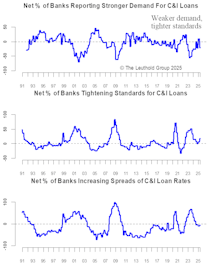
Despite heightened uncertainty from shifting trade policies, credit markets remain relatively stable—at least for now. While bank lending standards are tightening and loan demand is softening, market-based indicators like credit spreads and bank stock performance suggest credit risk is contained. If that holds, the broader economy may avoid serious damage, even as tariffs rise.
Risk Aversion Index: Stayed On “Higher-Risk” Signal
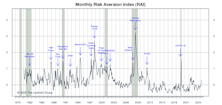
Despite recent policy back-pedaling, volatility is liable to stay elevated for the time being.
Anatomy Of A Major Selloff—A Cross-Asset Look
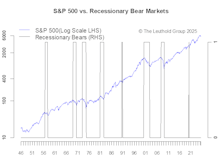
In exploring how cross-asset behavior differs between recessionary and non-recessionary market selloffs, a more striking conclusion emerged: The presence of a Fed put—or the absence there of—looks to be the more powerful force in shaping market dynamics across assets.
Inflation—More Volatility Ahead
.png?fit=fillmax&w=222&bg=FFFFFF)
The latest CPI report came in softer than consensus. The market ignored it. We expect a stagflationary scenario over the near term, but the longer term outlook has tilted materially toward a recession.
Risk Aversion Index: Stayed On “Higher-Risk” Signal
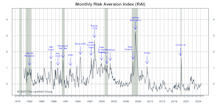
Within fixed income, we remain defensive toward credit, especially the low quality segment.
Slowdown Or Recession? Watch The S&P 500 Index!
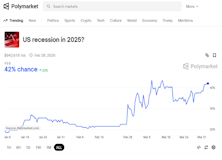
Uncertainty surrounding Trump’s second term and the risk of escalating tariffs have shifted market focus from inflation to growth, raising fresh concerns about a potential recession. Our updated Recession Dashboard shows a delicate balance, with risk now slightly above 50%—driven largely by weakness in equities and full-time employment. While some indicators have improved, the market remains the most important signal to watch. A sharp selloff could tip the economy from slowdown into recession territory.
Risk Aversion Index: A New “Higher-Risk” Signal
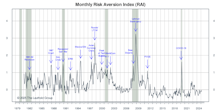
Our Risk Aversion Index moved higher in February and triggered a new “Higher-Risk” signal. A mechanical indicator can experience a prolonged period of whipsaws as there is a much greater amount of noise in the market these days.
Germany—Sick Man Of Europe No More?
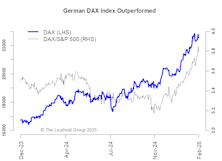
Despite volatile headlines, the German DAX index has staged a stellar double-digit rally since the start of the year—outpacing even the most “exceptional” S&P 500. In fact, over the last year or so, the DAX has now pulled ahead of the S&P 500.
Policy Uncertainty = Higher Volatility
.png?fit=fillmax&w=222&bg=FFFFFF)
The latest CPI report came in a tad hotter than consensus. Policies are likely the key driver of economic outcomes, including inflation, and we should get ready for more volatility going forward.
Risk Aversion Index: A New “Lower-Risk” Signal
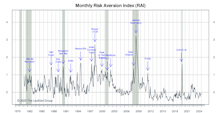
Our Risk Aversion Index ticked lower again in January and triggered a new mechanical “Lower-Risk” signal.
Bear Steepening In An Easing Cycle—Nothing To Lose Sleep Over
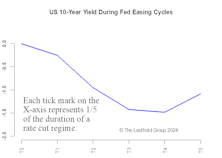
Bond market reactions are consistent with the historical norm, so far, and suggest that a reversal of the current bear steepening is more likely than not.
Are The Trump Trades Working Out?
.png?fit=fillmax&w=222&bg=FFFFFF)
It depends on who you ask. Non-equity investors might think the Trump trades are playing out just like in 2016. Over the last few months, FX traders and bond investors could have followed the 2016 script and made out like bandits (Charts 1 & 2). However, at this juncture, it might be time to at least take some chips off the table—if the 2016 analog stays intact, both the U.S. dollar and interest rates are poised to change course over the next few months. Near-term knee-jerk reactions aside (stronger dollar, lower yields), the newly announced tariffs will likely impact growth more than anything else, which would make it hard to sustain a stronger dollar and higher rates.
Risk Aversion Index: A New “Higher-Risk” Signal

While the policy regimes in both the U.S. and China are likely to support risky assets, today’s level of optimism doesn’t allow much of a cushion for disappointment.
2025 Time Cycles—Nothing To Worry About?

Overall, most patterns suggest a decent year for global equity markets. Expectations are already very high, though, and that leaves much less room for error. We strongly caution against extrapolating U.S. equities’ 2024 performance into 2025.
Top Charts Of 2024—Persistent Themes For 2025

We present our favorite charts from the past year and examine some of the key developments poised to have a significant impact in 2025.
Policies Drive Inflation Going Forward
.png?fit=fillmax&w=222&bg=FFFFFF)
The latest CPI report was largely in line with consensus. The combination of easy monetary and expansive fiscal policy, from both the U.S. and China, materially raises the risk of higher inflation over the next year.
The Dollar’s Déjà Vu?—Trump’s Second Edition

The Trump rally was the dominant theme in November, with the U.S. dollar playing a big part. Over the past few weeks, the dollar has appreciated significantly. The latest surge in the DXY index, both in magnitude and velocity, bears a striking resemblance to that which followed Trump’s unexpected win in 2016.
Risk Aversion Index: Stayed On “Lower-Risk” Signal

The Trump win, the Fed’s easing cycle, and favorable seasonality should support risky assets. However, expectations are very high and there is little room for disappointment.
Inflation—Changes Are Coming
.png?fit=fillmax&w=222&bg=FFFFFF)
The latest CPI report was largely in line with consensus. Our scorecard shows the trend of disinflation has stalled.
Risk Aversion Index: A New “Lower-Risk” Signal

The market keeps brushing aside the increase in geopolitical risks and we continue to believe the risk is underpriced. On the other hand, the Trump win and favorable seasonality should support risky assets at least in the near term.
Perception for the Professional
March 2026 Issue

Featured Articles
Sector Navigator
March 2026 Issue