Macro Monitor
Risk Aversion Index—Increased But Stayed On “Lower Risk” Signal

However, we recommend a defensive bias within the fixed income space for the time being.
US Bonds
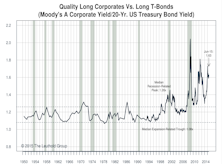
Net outflows continued as the cushion from credit spreads is still inadequate...So far risk contagion from the Puerto Rican bond default has not been an issue. Munis still look attractive relative to Treasuries, and investment grade Corporates...The improvement in credit markets and inflation expectations looks more shaky as oil prices broke below the recent tight range and uncertainty around Greece adds to the overall risk aversion. We reduced these bonds to Unfavorable.
Steeper Yield Curve: All About Inflation

The steepening move in the yield curve is prevalent across many countries and is primarily driven by higher inflation expectations.
Risk Aversion Index—Stayed On “Lower Risk” Signal

While we acknowledge the volatile market environment, we still favor credits within the fixed income space.
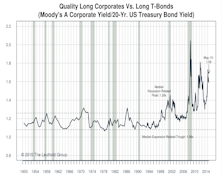
End Of The QE Trade? Too Early To Call

The common driver behind the sharp reversal of many recent asset class trends is the unwinding of the ECB QE trade.
Risk Aversion Index Fell Sharply, Generated A New “Lower Risk” Signal
Favor credits within fixed income in the near term but beware of volatility ahead
U.S. 10-Year: Many Reasons To Be Patient
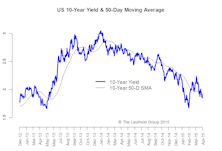
From a price action perspective, the drop below the 50-day moving average and the failed higher-high, higher-low pattern are not supportive of an imminent up-turn in interest rates.
RAI Ticked Up And Stayed On “Higher Risk” Signal

We recommend staying cautious and exercising patience in the near term.
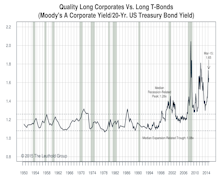
U.S. 10-Year: Looking For A Follow-Through
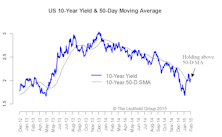
This is the first time in the last year or so the 10-year yield has broken through, re-tested, and held above the 50-day moving average.
Inflation & Monetary Policy—A Feedback Loop

Inflation and inflation expectations are key inputs to central banks’ policy decision process. Divergent policies have very different impacts on inflation.
Risk Aversion Index—Fell Sharply But Stayed On “Higher Risk” Signal

We are leaning towards a more favorable outcome for risky assets but staying alert.

U.S. Interest Rates & Credits—Keep An Open Mind

The ease with which the 10-year yield broke the strong 185 bps barrier was simply too hard to ignore. This tells us interest rates will likely go lower before going higher. The current active range is 140-185.
EU QE - Success Highly Uncertain

We rely on past experiences in Japan, the U.K., and the U.S. to give us clues about the future path of the EU QE.
Risk Aversion Index—Stays On “Higher Risk” Signal

The market is at a critical juncture with oil-related assets very oversold while equities are holding near all-time highs.

U.S. Interest Rates And Credits—Expect The Unexpected

We expect much higher volatility in interest rates this year as the market grapples with the prospect and timing of the Fed’s first rate hike. Our base case is for the Fed to raise rates in the third quarter. There are various reasons for the Fed to be patient. Inflation will be the biggest one. The threat of oil-related risk contagion is certainly real. We are concerned that equities have not fully priced in this threat.
Perception for the Professional
May 2026 Issue

Featured Articles
Sector Navigator
May 2026 Issue