Stock Market
If Inflation Has Peaked, Thank The Stock Market—Not The Fed
.jpg?fit=fillmax&w=222&bg=FFFFFF)
High inflation continues to dominate the headlines, but it is only one piece of the “weight of the evidence” that’s stacked against the stock market. Still, in ironic fashion, stock-market action itself suggests that inflation is set to peak.
The Stock Market IS A “Fundamental”
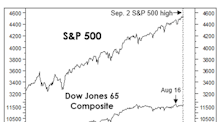
The impact of U.S. stock-market “hegemony” extends far beyond currency markets. We believe the mania has progressed to the point where the stock market itself will shape the intermediate-term and even long-term fortunes of the U.S. economy more than it ever has before.
Are Stocks And The Economy Disconnected?
The consensus among market pundits is that a U.S. recession will be averted and, as a consequence, domestic stocks remain the best game in town.
Slowdown Or Recession? Confidence Is Key

The pattern of sharp sell-offs followed by equally sharp rallies continued in June. Most risky assets recouped nearly all the losses suffered in May, and then some.
Stock Market Valuation Check

The Major Trend Index has bounced back into positive territory, and we expect an already-expensive U.S. market to make even higher highs later this year and into early 2018. But we are keeping an eye on the Intrinsic Value work to assess the potential losses that might occur when cyclical conditions eventually turn hostile—possibly in later 2018 or in 2019.
Was That All There Was To It?
As quantitative investors, the disciplines of the numbers trump stories—even our own. But we’re struck that the stories depicted by our Major Trend Index and other market tools over the past two years are entirely logical and sequential. Unfortunately these stories rhyme with those of past market cycles.
Navigating The First Rate Hike
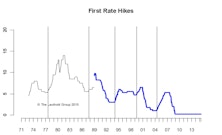
Our current view is the lift-off will be December or later. Assuming inflation will pick up and the Fed hikes the rate by the end of 2015, stocks will perform relatively well, with international stocks a better bet than U.S. stocks.
The Economy And Earnings
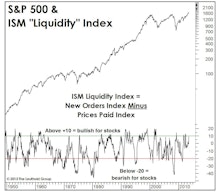
The YTD surge of 19% in the S&P 500 should ensure a stronger second half economy, and the big five-point jump in the latest Purchasing Managers Survey (ISM) might be the first evidence of this.
Ringing In The New Year On A Wide Range Of Topics

Did we just get a Technical “all clear” sign? Is the trading day getting you down? What about corporate earnings, or sovereign debt and the stock market?
Up Market In January = Up Year??
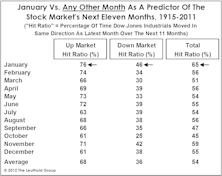
As January goes, so goes the year. 2012 looks like it could well be an up year for stocks based on the January barometer. Market cycle chart from 1958 also says 2012 will be the “time to buy.”
“Another” Year Of Gains?
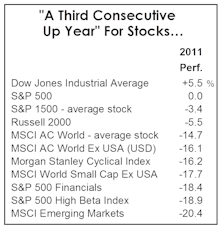
U.S. equity investors were disappointed in 2011, but we’d point out they fared better than investors in 45 of 48 other countries tracked by MSCI.
Iraq Withdrawal? “No-Win” Military Conflicts’ Impact On the Stock Market

Is market rallying in anticipation of conflict resolution in Iraq? Bush will be under increasing pressure to resolve things before the 2008 Presidential election. We look at the Korean conflict and Vietnam war for clues about how this possible resolution in Iraq may play out in stock market.
Inflation Impact On The Stock Market

CPI expected to decline in 2006 and historically a decelerating CPI is a significant stock market positive, producing above average returns. Stage could be setting for a market rally in 2006 as inflation pressures wane.
View From The North Country

Steve Leuthold lays out both the bullish and bearish stock market cases.
View From The North Country
A recap of the year so far, and our outlook for the second half of 2005.
View From The North Country

A special Kate Welling interview with Steve Leuthold. Discussion runs the gambit from Leuthold’s current outlook for the stock/bond markets, to groups he favors, to liquidity concerns, and hedge funds.
U.S. Market Remains Relatively Overvalued Compared To Rest Of World
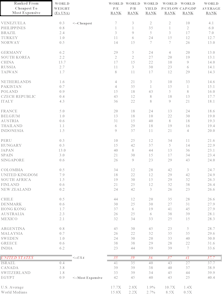
U.S. market ranks as fifth most expensive market based on comparisons to 44 countries from around the world.
Keep In Front Of The Economic Curve

Stock market is a leading economic indicator, and typically turns down before the economy turns down. On average, 40% of the stock market decline occurs before the recession begins.
View From The North Country
Steve's Half Time Report: A recap of the year so far, and our outlook for the second half of 2004.
Bull Market: Part II

Bull Market Part II. Early 2004 correction seems over, rally appears to be developing
Perception for the Professional
March 2026 Issue

Featured Articles
Sector Navigator
March 2026 Issue