Normalized P/E
The Median P/E Valuation Benchmark

When stocks get back to median valuation levels, the odds are the stock market is at or close to its lows.
The Historical Significance Of Median P/E Valuations

70% of all the market declines since 1945 (post WWII), bottomed within 10% of the median historical normalized P/E ratio.
View From The North Country

August was comparable to flying through a category five hurricane, a violent storm with gut wrenching updrafts and downdrafts. The relatively low volume recovery from the August lows has the characteristics of a bear market rally, not the beginning of another major move to the upside.
Corporate Share Repurchases Now At Record Levels...Five Reasons Why They Are Expected To Slow
Share repurchases have been a major driver in the extension of the bull market, but this month’s “Of Special Interest” outlines several factors which are likely to contribute to a deceleration in corporate repurchase activity over the next several quarters.
View From The North Country
Steve Leuthold discusses the rationale for using “normalized” earnings versus 12-month earnings and how it now makes little sense to sell in May and go away…..unless you need a long vacation.
Stock Market Downside Limited Based On Current Valuations

Small Caps significant laggards in July, and technicals which had been supporting Small Caps, despite excessive valuations, have now eroded. Small Cap leadership model now negative.
Checking In On The Tech Top 20–Valuations Remain Reasonable

The twenty biggest Tech stocks were flat in April, but remain up 7% YTD on a median basis.
Boosting Inflation Projections

Boosting our 2005 inflation projections based on continuing high energy prices and anticipated above average September CPI/PPI inflation readings. Also, the implications of higher inflation.
Client Questions And Answers

A look at why our very overweight Healthcare position and zero weight in Financials has not hurt our performance this year.
Tech Watch

Technology stocks retreat in late September. The NASDAQ records its first down month this year (–1.3%), but finished Q3 up 10.1%.
An Explanation For The Confusing S&P 500 Book Value Revision?

We still have been unable to get a satisfactory explanation from Standard & Poor’s of why and how they revised their Book Value calculation. The revisions were huge and had a significant impact on our valuation metrics.
Tech Watch

This may be one of the few sectors that has the opportunity to provide 20% or more growth in 2003. If investors can get over their fears, they could be rewarded by the Tech sector.
S&P Announces Huge Upward Revision In Book Value Calculations…..Without Explanation

We remain confused by the huge revisions without a valid explanation.
Is The Stock Market's Current P/E Dangerously High?

It is possible for new bull markets to emerge from high P/E levels. Earnings are cyclical, so when earnings decline in a recession, it can mark a very good buying opportunity despite high P/Es.
Valuations…..Most Bear Markets End Around Median P/E Levels

Earnings are rebounding strongly. S&P operating earnings estimates are up 21% from 2001 to 2002, and up 23% from 2002 and 2003. Severe cost cutting may not be fully factored into analyst estimates. Look for upside earning surprise.
Valuations Are Sky High…How Can The Leuthold Group Be Bullish?

An explanation herein, with the use of our trusty histograms.
P/E Peaks and Troughs…..Since World War II

It’s possible that valuations could ultimately fall to their “ultra cheap” levels, with P/E ratios around 10x earnings. However, it is more typical for bear markets to bottom around the median P/E levels of 16.0x.
Why We Conclude Equities Are No Longer Overvalued
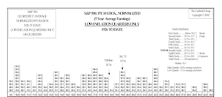
Explanation of how we use historical valuations to compare to today.
Normalizing Earnings Is Now Essential
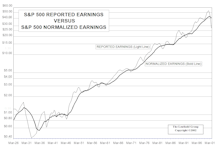
Earnings are cyclical and the economic cycle causes distortions. A focus on which earnings to use and how to evaluate the differences.
Irrational Exuberance Then & Now

Many investors have come to realize just how overvalued the stock market became in the late 1990s. Alan Greenspan may have been early with his comment about “irrational exuberance” in late 1996, but in hindsight his warning was warranted.
Perception for the Professional
March 2026 Issue

Featured Articles
Sector Navigator
March 2026 Issue