Leadership Cycles
The Cycle That Never Was
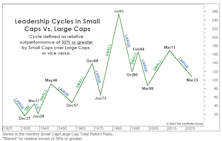
At 144 months, this is now the longest Large-Cap cycle on record, but its dominance will have to prolong to eclipse the second-longest leadership phase (1946-1957), in which Large Caps achieved a 190% performance spread above Small Caps.
Small Caps: We’ve Seen This Setup B-Four
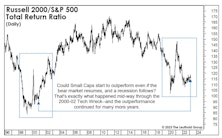
In mid-2020, we wrote that a new multi-year leadership cycle had probably begun. Technically, that belief hasn’t been disproven, but the extent of outperformance has been disappointing in the nearly three years since.
Not Overthinking Small Caps

There are some positive cyclical influences for Small Caps, like higher inflation and deeply negative real interest rates. But in our minds, the valuation spread versus Large Caps is more important.
A Look At The Small-Cap Setback
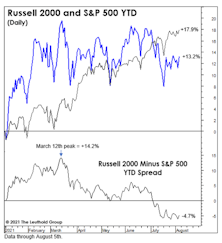
The Russell 2000 has blown the 14% lead it had built against the S&P 500 earlier this year, and now trails the index by almost 5%. Has that type of intra-year reversal happened before, and, if so, did it portend a major change in leadership?
A Small-Cap Theory Of Relativity?
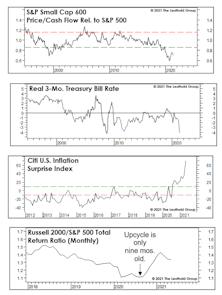
Small Cap median valuations are among the highest in our 40-year database, but they are bottom quintile versus the nose-bleed level of the median Large Cap. If this Small Cap leadership cycle only matches the shortest one on record, it will last another three years. Based on the valuation gap, that guess seems conservative.
The “Next Big Thing” May Not Be Big
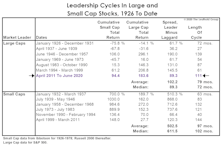
There’s one trend that’s lasted almost as long as the bull market and economic expansion and it hasn’t definitively come to an end. The current Large Cap Leadership Cycle hit the nine-year mark in April.
Leadership Rotation And Bear Markets
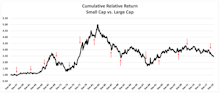
Bear markets are the financial system’s version of the changing seasons—a cycle we “enjoy” to extremes here in Minnesota.
Can New Reins Take Hold Of An Old Bull?
Three months ago, Large Cap Growth and Momentum were the winning ways to play the market; the long-time resiliency of these entrenched leaders was a cornerstone of the bullish case. Suddenly it’s Value and Deep Cyclicals leading, anything possessing Momentum, of late, has turned toxic. Ironically, this “new” leadership is now the foundation for the bullish reasoning.
Big Is Still Beautiful
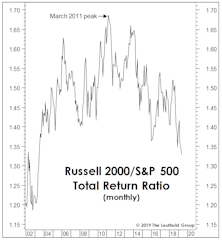
The 10-year-old bull grabs most of the headlines, but its younger sibling has begun to command more respect.
It’s Not A Pause… It’s “Paws”
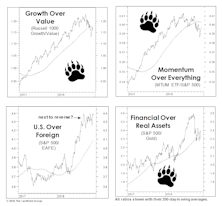
A bear market will almost always prove to be the catalyst of one or more shifts in long-term market leadership.
Monitoring Mo’s Mojo
.jpg?fit=fillmax&w=222&bg=FFFFFF)
Momentum is one of the most successful investment styles over the long run, and does particularly well in the later stages of a bull market during the run-up to an eventual peak.
Value Style’s 100-Year Flood
Value is the philosophical cornerstone of many legendary portfolio managers and is widely recognized as one of the most robust quantitative investment factors. Yet, despite its compelling conceptual merits and long-term record of superior returns, recent years’ underperformance of Value has lasted long enough to weigh on even 10-year performance records.
The Foreign Stock Conundrum

A good rule of thumb for thematic and sector investors is that stock market leadership rarely repeats itself in consecutive cycles.
Small Caps Out Of “Phase?”

If one manipulates the data correctly, one can make the size effect—whereby Small Caps earn excess returns over the long pull—look instead like a beta effect.
EM Leadership: Just The Beginning?

Our EM Allocation Model triggered a BUY at the end of August after 5 1/2-years in bear mode. This upgrade is consistent with a cyclical leadership run of one to four years relative to Developed Markets.
Rotation Away From Low Vol?
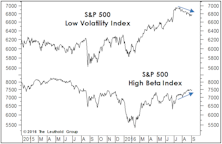
An encouraging break from a 15-month leadership pattern: Low Vol stocks have rolled over since mid-July, while the High Beta cohort has finally eclipsed its late-April highs.
Low Quality Dominance Since March
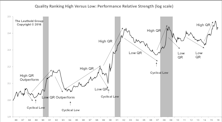
After two rough months moving into 2016, Low Quality stocks rallied and are now leading High Quality stocks YTD. Investors apparently brushed-off the slowdown scare from China, and later the Brexit headlines.
Small Caps: The P/E Premium Lives On…

Small Cap valuations may look better on a relative price-to-book basis, but we still believe their Normalized P/E ratios will suffer further compression before Small Caps reclaim the leadership baton.
Small Cap P/E Ratios: Not Yet Low Enough

When the Fed surreptitiously began to tighten as we believe (via tapering), in January 2014, history suggested that Consumer Discretionary and Small Caps would be the most likely initial market victims (at least from a relative perspective).
Value, Momentum, And The Stock Market Cycle
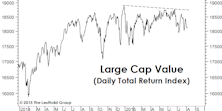
Conventional measures of market action, like breadth and industry leadership, point to the formation of a bull market top. Divergences abound.
Perception for the Professional
March 2026 Issue

Featured Articles
Sector Navigator
March 2026 Issue