Volatility
Small Cap Quality Check
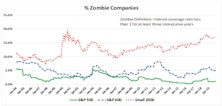
December’s Of Special Interest provided a recap of our Asset Allocation team’s view of small cap equities, suggesting that small caps had underperformed and reached a valuation discount that made them an interesting contrarian value proposition. Several clients responded with follow-up questions, wondering if the discount valuation of small caps was offset by their typically weaker business models.
Can Equity Investors Eat Their Cake And Have It Too?

Investor sentiment seems to be unusually conflicted these days. There are worries aplenty, including numerous political skirmishes of consequence around the world, a slowing global economy, and lofty U.S. equity valuations. On the other hand, fiscal stimulus is high for this stage in an economic cycle and the Fed is easing monetary policy, two policy drivers it rarely pays to bet against.
Low Vol For All Seasons?

The early August setback took the S&P 500 below its late-January 2018 high—and the time when we first trimmed net equity exposure in Leuthold tactical funds from a nearly fully-invested posture.
Portfolio Positioning: Deciding Not To Decide

One portfolio strategy that attracts our interest is a barbell between Growth or Quality on the bullish side, paired with a Low or Minimum Volatility sleeve for the bearish side. This approach deals with today’s uncertainties by essentially “deciding not to decide.”
Beta & Volatility On The Move
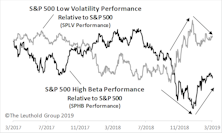
We explore these factors’ behaviors from the stance of our proprietary equity group universe and present industry ideas—across sectors—that fit each of these investment viewpoints. The intent is to offer new investment ideas from a different analysis perspective.
Earnings Releases Cause Surge In Price Volatility

Three years ago, we did a series of studies looking at price reactions to corporate earnings releases (ER) and we found that, since 2007, price movement has become more dramatic on ER days.
Defensive Equity Styles: The Sultan Of Swat And The Splendid Splinter

After performing amazingly well in the record-setting bull market run since 2009, defensive equities are once again drawing attention for their traditional role as hedges against a continuation of recent market declines.
Leverage Factor: A Boost For High Quality Stocks?
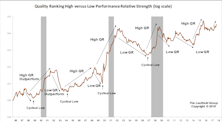
A review of Quality factors, as well as the lower valuations of High Quality stocks, supports the current High Quality cycle amid rising market volatility. The Leverage factor may provide particularly strong backing for High Quality stocks.
Will Rates Kill The Low Vol Mania?
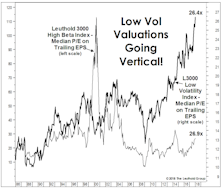
While there are many parallels between recent action and that of 1999-2000, stock market leadership is not one of them.
Are Higher Rates Set To Hit The Low Vol Stocks?

The Low Volatility theme has been the darling of this bull market, benefiting from years of skepticism surrounding the economic expansion and the related lack of competition from fixed income instruments...
2017 Vs. Other Years Of Market Calm

Record lows in implied volatility (VIX) have been analyzed ad infinitum throughout 2017, but the readings shouldn’t come as any surprise.
Someday, Fear Won’t Be Bullish
Does this year’s incredibly low stock market volatility mean the end is near? History is inconclusive.
Too Calm For Comfort?

Is stock market volatility so low that it’s a bad thing? For volatility sellers, the answer is an unequivocal yes. But for stock market investors, the answer isn’t so clear.
What’s Ailing Small Caps?

While the Russell 2000 loss during the 2015-16 correction was almost double that of the S&P 500, the decline did not fully erase the P/E premium Small Caps have enjoyed since the middle of last decade. The premium might need to be entirely erased before a multi-year Small Cap leadership cycle can begin.
Tilt Toward Beta
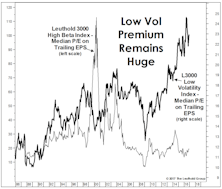
Stock market valuations certainly show no lack of investor confidence: each of our “Big Six” valuation measures now resides in either its ninth or tenth historical decile.
In The Volatility “Sweet Spot”

Market anxieties have inched up over the last several weeks despite the proximity of all major indexes to cycle highs. The MTI’s Attitudinal category has improved by about 70 points in the past few weeks, and we sense more worry than usual over potential for turmoil in the seasonally-weak months of September and October.
Momentum Trouble

Momentum reversed in February, primarily due to rallying Materials stocks. Value and Profitability both performed well.
Paying Up For Protection

While most factors performed well during the January sell-off, those providing stability worked the best. Low Volatility, Profitability, and Size were notable outperformers.
Bridesmaid Asset Strategy
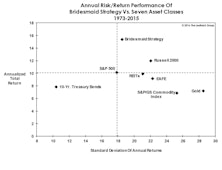
Liquidity “consuming” strategies like price momentum are generally considered to be more volatile than liquidity “providing” approaches like value investing.
Quantitative Factor Performance: What Is Working?

For the third consecutive year (thus far), quantitative factors worked best within the Materials sector. Energy also saw success as the decline in oil hurt the same stocks as in 2014. Factors were least effective in Health Care and Telecom.
Perception for the Professional
March 2026 Issue

Featured Articles
Sector Navigator
March 2026 Issue