Valuations
The Bullish Case: A Mental Exercise

We’ve been correctly positioned near our tactical portfolios’ equity minimums, yet we’re oddly compelled to use this month’s “Of Special Interest” section as a very public second-guessing of that move.
Estimating the Downside - February 2016
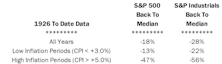
The S&P Industrials’ downside to mean valuation (excludes Utilities and Financials) is 24%, about 3% less than last month’s reading.
Fed Tightening: The Two-Year Anniversary?

We’ve long argued that this tightening cycle began in January 2014, the month of the first of seven tapering moves which occurred through October of that year. There’s both economic and market evidence to back up this claim.
Estimating the Downside - January 2016
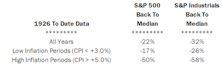
The S&P 500 lost 1.8% (price only) in December. Based on the 1957-to-date valuation metrics presented, downside to its historical average decreased by about 2% from last month’s –19% reading.
“Top In” Or “Topping Out?”
The stock market rally has carried far enough to flip some of our trend-following work bullish, lifting the Major Trend Index to a low-neutral reading. The improvement prompted an increase in asset allocation portfolios’ net equity exposure to 42% (up from 36% previously).
To Play The Rally, Or Not To Play?
Question: What will you do if the Major Trend Index returns to its bullish zone?
Valuations: The Bad And The Good
Foreign valuations experienced nowhere near the expansion enjoyed by U.S. stocks during the latest bull market, but their cheaper valuations rarely seem to inoculate them from outsized losses during corrections and bear markets.
Earnings: What Is Normal?
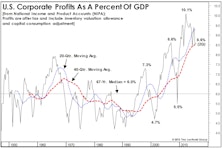
Corporate profits are notoriously cyclical, and for decades we’ve sought to temper their swings by using a five-year smoothing of S&P 500 EPS in our valuation work.
How Far Could It Fall?
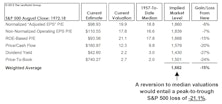

Emerging Markets: A Half-Off Sale!

The Chinese government’s repeated stock market intervention attempts over the past several weeks have been remarkable, and obviously antithetical to the country’s move toward a more laissez faire corporate environment.
Chinese Equity Market: Valuation Gap And Going Private

The recent capitulation of the Chinese domestic equity market (or A-shares) makes headlines almost every day. Different theories, circulating in both China and overseas, pop up frequently to explain the daily movement of A-shares. It seems the investment community gets excited when the Chinese market is on the decline (but not so much when the market is on the upswing); many investors are quite reactive to any negative news coming out of China.
High Quality Outperforming, But Valuations A Concern

High Quality stocks had another winning quarter on a relative basis returning +0.1% in Q2, while Low Quality stocks lost 2.8%. Small Cap High Quality stocks also beat their counterparts.
Stock Market Valuation Check
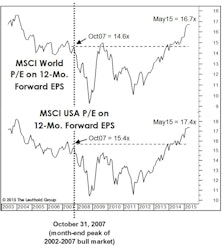
It now goes almost without saying that whenever the stock market moves to a new cycle extreme, so does the MTI’s Intrinsic Value category. In late May, this reading dropped below –400 for the first time in this bull market, and is now within 150 points of its 2007 extreme.
Yet Another All-Time High...

It’s generally a bad idea to roll out new valuation readings that one doesn’t fully understand late in a cyclical bull market. But we’re going to do it anyway, recognizing that a similar practice proved to be the undoing of dozens of fund managers and Tech analysts at the turn of the millennium.
Emerging Markets: Close… But Not Quite
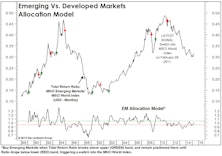
Emerging Market stocks are probably the cheapest equity subgroup in the world today, trading at 13.0x our 5-Year Normalized EPS estimate—much lower than that of foreign Developed Markets (17.6x) and the S&P 500 (21.3x). But, EM stocks have languished near these valuation levels for almost three years.
Tech: One Year After The “Bust”

At a time when social media stocks are the rage, stodgy “Old Tech” has quietly tacked on a 20% gain in the 13 months since the social media peak, while the NASDAQ Internet Index is still a bit below its March 2014 high. Yet, “Old Tech” P/CF remains below the level of 1995.
A Quick Check On Global Fundamentals
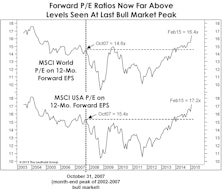
The Street’s most clever invention is “12-month forward operating earnings” because the stock market invariably appears cheap on the basis of such inflated estimates.
A Few Thoughts (And A Lot Of Charts) On The Oil Collapse
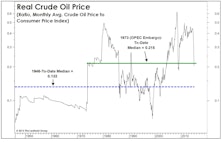
Has the recent collapse in crude oil prices presented us with a good opportunity for an outright commodity investment? No. Energy stocks aren’t on our radar screen either.
Stuck In Neutral?
Extreme market viewpoints get the headlines, but it’s baked into our disciplines that we will (occasionally) be noncommittal.
Perception for the Professional
March 2026 Issue

Featured Articles
Sector Navigator
March 2026 Issue