Risk Aversion Index
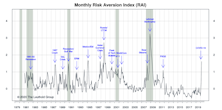
Risk Aversion Index: Stayed On “Higher Risk” Signal

While macro data has turned from “bad” to “less bad,” a lot of hope for a quick recovery in economic activity has been priced in. We recommend staying within range of the Fed’s fire power for the time being.
A Cross-Asset Dash For Cash
March’s mad dash for cash didn’t stop with rates/credit/FX markets. Among equities, there was also a strong preference for cash liquidity. The market rewarded companies that had strong cash positions and punished those without—which explains why traditionally defensive styles actually underperformed.
Risk Aversion Index: Stayed On “Higher Risk” Signal

We will remain cautious toward lower-grade credit until we see the peak in new coronavirus cases. It all comes down to the recession call and the coronavirus has significantly increased recession risk.
Risk Aversion Index: New “Higher Risk” Signal

We are turning more cautious toward lower-grade credit and will likely remain so until we see the peak in new coronavirus cases.
Risk Aversion Index: Stayed On “Lower Risk” Signal

While the overall near-term tone is still positive for risky assets, complacency seems widespread too. This tempers our enthusiasm to chase risky assets at this point.
Risk Aversion Index: New “Lower Risk” Signal

We are turning favorable again toward credit, especially emerging market sovereign debt.
Risk Aversion Index: Fell But Stayed On “Higher Risk” Signal

Recent data has certainly increased the risk of an imminent recession, but more confirmation is needed to move us into the recession camp.
Risk Aversion Index: Stayed On “Higher Risk” Signal

More and more signs are pointing to investors’ loss of confidence in central banks’ ability to revive the global economy. We maintain “neutral” on all credit classes.
Risk Aversion Index: Stayed On “Higher Risk” Signal

A hawkish Fed cut, immediately followed by Trump’s new tariffs, caused quite a bit of market indigestion, a clear reminder of how quickly things can change.
Risk Aversion Index: Stayed On “Higher Risk” Signal

Our Risk Aversion Index fell in June but stayed on the “Higher Risk” signal generated in May.
Risk Aversion Index: New “Higher Risk” Signal

Our Risk Aversion Index rose sharply in May and generated a new “Higher Risk” signal. We continue to monitor EM assets closely, given their leading tendency. Both Chinese stocks and the Yuan have stabilized a bit lately, which is encouraging... but they are not out of the woods yet.
Risk Aversion Index: Maintains “Lower Risk” Signal

Our Risk Aversion Index ticked lower in April and stayed on the “Lower Risk” signal. Most risky assets participated and the rally was broad-based. The only fly in the ointment is EM assets. The recent weakness in both Chinese stocks and the Yuan is certainly worth paying attention to.
Risk Aversion Index: Stayed On “Lower Risk” Signal

With most major central banks now turning dovish, our view on credit is more constructive. We still view pull-backs in EM assets as better entry points. Investment grade corporate bonds are also attractive, and we maintain a neutral view on Munis and High Yield bonds.
Risk Aversion Index: Stayed On “Lower Risk” Signal

While global central banks’ dovish turn provides a supportive backdrop for the risk rally, short-term overbought conditions are everywhere too.
Risk Aversion Index: New “Lower Risk” Signal
With the Fed now pausing its rate hikes, and the PBoC recapitalizing banks and reactivating lending, our view on credit has turned from defensive to neutral, with a more constructive bias. One of our biggest concerns, global central bank liquidity withdrawal, has been eased by the recent policy moves.
Risk Aversion Index: New “Higher Risk” Signal

Despite some near-term oversold conditions in risky assets, we continue to recommend defense and expect higher volatility to remain across all asset classes.
Risk Aversion Index: New “Lower Risk” Signal

Despite the recent signal whipsaws, we have been cautious toward all risky assets and we continue to recommend defense amid higher volatility across all asset classes.
Risk Aversion Index: New “Higher Risk” Signal

We have been leaning toward the defensive side despite the recent signal whipsaws and we continue to recommend caution in light of the increase in volatility across all asset classes.
Risk Aversion Index: New “Lower Risk” Signal
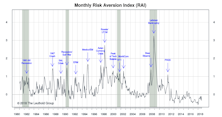
Our Risk Aversion Index fell sharply last month and triggered a new “Lower Risk” signal. Caution is still strongly recommended, and we favor higher-quality credit within fixed income.
Risk Aversion Index: New “Higher Risk” Signal

Our Risk Aversion Index reversed higher last month and triggered a new “Higher Risk” signal. We recommend a defensive stance within fixed income.
Perception for the Professional
March 2026 Issue

Featured Articles
Sector Navigator
March 2026 Issue