Consumer Discretionary
Be Contrary On Discretionary

The Fed’s June announcement of a pause with further rate hikes to come has extended the uncertainty of whether an inverted curve and persistent policy tightening will ultimately lead to a recession. The business cycle is a critical investment issue because the relative returns of many assets depend on the state of the macro economy. This study examines the Consumer Discretionary (CD) sector’s behavior in recessionary times, with the goal of understanding the typical performance pattern during economic lows in order to help investors position their portfolios for a potential recession.
Research Preview: Recessionary Discretionary

While sentiment on the potential for a recession by year-end is split, there is little dispute that it’s an important question for cyclical sectors. Consumer Discretionary is most exposed to the business cycle, and we are interested in understanding its prospects as we head toward a potential economic slowdown.
Additional Factors
The S&P 500 had an almost biblical upheaval to start 2023. The “last were first” and the “first were last.” In January, the 100 worst performing stocks of 2022 had an average return of +16.1% while last year’s 100 best performers posted +1.7%.
Additional Factors
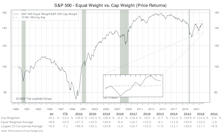
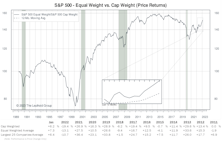
The six-week rally that started mid-June featured advances from AAPL (+25%), AMZN (+30%), and TSLA (+39%), which accounted for one-fourth of the S&P 500’s gain. Despite the recent preference for Value, a spike in interest rates, and the bear market, the index’s concentration in the top-five firms is still near it’s all-time high set in August 2020.
A Tale Of Two CDs
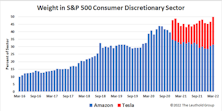
Investors considering a position in the Consumer Discretionary sector need to be aware of what they are buying: a basket in which one-half consists of mature, modestly-valued consumer brands, while the other half is two mega caps with excellent growth profiles and high absolute valuations. It would be a mistake to view this sector as a homogeneous set of companies.
Danger For Discretionary?
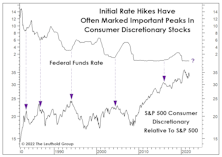
It’s been so long since investors have faced a serious Fed tightening episode that they may have forgotten a helpful rule of thumb: An initial hike in the fed funds rate is usually a good excuse to dump some Consumer Discretionary stocks.
Discretionary And Industrials Decline Rapidly In Rankings

Not much has changed at the top of our sector rankings in recent months, with Financials, Energy, and Info Tech in the top three positions. But, we have seen a very rapid decline with two sectors, Consumer Discretionary and Industrials. Over the past several months, these cyclical sectors have sunk to the bottom of our ratings. Here we take a look at what has caused this dramatic drop.
Industry Group Dreams & Nightmares—The Bear Market Edition
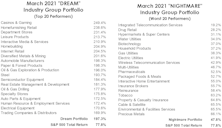
Given that we've recently passed the one-year anniversary of the bear-market bottom of March 2020, we thought it might be interesting to apply our annual Dream/Nightmare exercise to periods following bear-market lows; the idea here being that a major market bottom may serve as a “reset” for new industry trends.
Consumer Discretionary: Neither Fish Nor Fowl
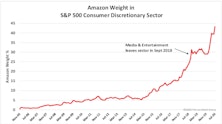
The combination of rebounding economic activity and a surging (peaking?) enchantment with mega cap growth stocks is pressing investors to make an important tactical call: whether to take profits in some highfliers and shift assets to sectors with more cyclical exposure and better valuations.
Research Preview: Not Your Parents’ “Discretionary”
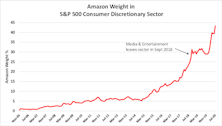
The combination of rebounding economic activity and a surging enchantment with mega-cap growth stocks is pressing investors to make an important tactical call: whether or not to exit some highfliers and shift assets to sectors with more cyclical exposure.
S&P 500 Sector Leaders Since Market Top

Since the market peak on February 19th the S&P 500 Health Care sector is down only 1.1%. Among the S&P 500 sector indexes, Health Care and Consumer Discretionary are the performance leaders.
Industry Returns: The Decade’s Winners & Losers
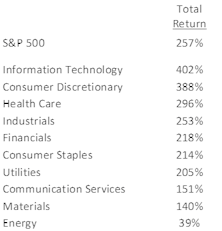
This “decade in review” edition examines the performance of sectors and industries, looking at the best and worst groups to reveal the stories they have to tell.
Sector Rankings
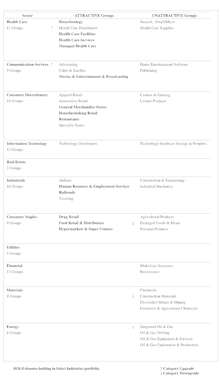
The top-three rated sectors are Health Care, Communication Services, and Consumer Discretionary. Scoring lowest in the latest rankings are Energy, Materials, and Financials.
Sector Rankings
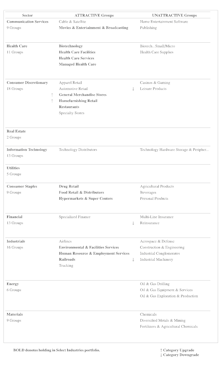
The top-three rated sectors are Communication Services, Health Care, and Consumer Discretionary. Scoring lowest with the latest ratings were Materials, Energy, and Industrials.
Sector Rankings
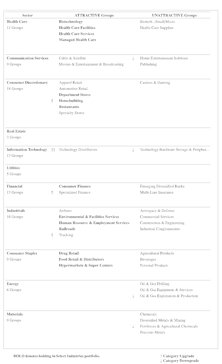
The top-three rated sectors are Health Care, Communication Services, and Consumer Discretionary, with Information Technology dropping from the top-three. Rounding out the bottom end of the rankings, for the second consecutive month, are Materials, Energy, and Consumer Staples.
Sector Rankings
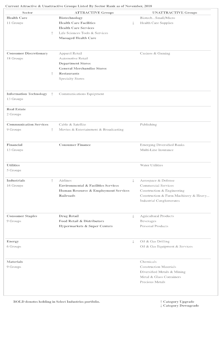
For the sixth consecutive month, the top-three rated sectors are Health Care, Consumer Discretionary, and Info Tech. Rounding out the bottom end of the rankings are Materials, Energy, and Consumer Staples.
Rates Are Already Clobbering Consumer Stocks
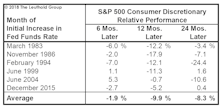
“Three steps and a stumble” was the old rule of thumb for timing the impact of Fed tightening on the stock market.
GS Score Sector Rankings With Attractive & Unattractive Rated Industry Groups
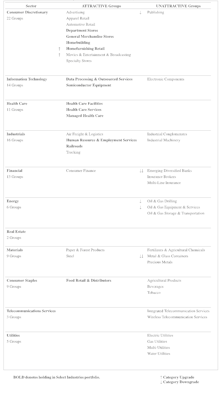
Consumer Discretionary can’t be topped; it has held on to the highest-rated spot for seven consecutive months. Utilities and Telecom continue to close out the bottom two.
Altitudes Are Too High— And Attitudes Are Getting There
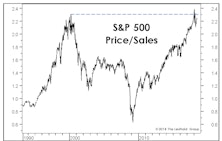
An important feature of this bull market—and a reason for its longevity—is the slow recovery in investor attitudes relative to valuation altitudes...
Sector Rankings
Consumer Discretionary has held on to the highest-rated spot for six consecutive months. Coming in last (again) is Utilities. After rating among the lowest two positions between April 2017 and April 2018, Energy finally improved and now sits in 6th place—the middle of the pack.
Perception for the Professional
March 2026 Issue

Featured Articles
Sector Navigator
March 2026 Issue