Price/Sales
Weigh Those Bags Before Checkout

You’ve likely heard of “shrinkflation,” the practice in which a package of M&M’s is reduced from 40 pieces to 32, while the price per bag is unchanged. Publicly-traded companies have been engaged in similar schemes for awhile.
A Flight Of Wee Dragons
.jpg?fit=fillmax&w=222&bg=FFFFFF)
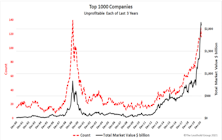
In our mid-month Of Special Interest, “Valuation Extremes: Here Be Dragons,” we examined valuation outliers as a measure of market sentiment. The hypothesis was that exuberance is reflected in investors’ willingness to hold stocks priced on an aggressive “vision” of the future; companies that are either habitually unprofitable or trade at a Price/Sales ratio above 15x.
Valuation Extremes: Here Be Dragons
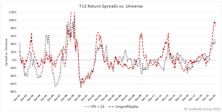
Top decile valuations are often the result of unduly positive investor sentiment that leads to inflated multiples. Bullishness comes in varying strengths: optimism, enthusiasm, exuberance, and, at the extreme, the mania of crowds. Because bullishness manifests itself in aggressive valuations for speculative companies, we believe the prices being applied to such companies - for which intrinsic value is dependent on a future that looks significantly different than today - are an excellent measure of investor sentiment. In that spirit, we examined past cycles of extreme valuations with the goal of understanding how they relate to investor sentiment and what they might tell us about market conditions and relative returns.
A “Fed” Conundrum
“Don’t fight the Fed” has been great advice for stock market investors over the last nine months. For 2021, that won’t cut it. It should be: “Don’t believe the Fed.”
A Scary Chart, Revisited

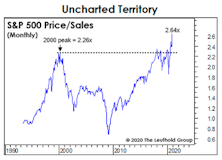
For a couple years, we’ve labeled the S&P 500 Price/Sales ratio as the scariest chart in the Leuthold database, and last year’s decline did little to improve its intimidating appearance.
Market Observations
.jpg?fit=fillmax&w=222&bg=FFFFFF)
It’s been one of the worst years on record for diversification, with our hypothetical All Asset No Authority (AANA) portfolio down 7.2% YTD through yesterday. That’s the second-worst year for AANA since 1972, and there’s probably not enough time left for performance to undercut 2008 (-24.9%) for the bottom spot.
No, It’s Not Y2K Again…But The Lights Could Still Go Out
.jpg?fit=fillmax&w=222&bg=FFFFFF)
For the last year, we have labeled the S&P 500 Price/Sales ratio—which has returned to its Y2K bubble levels—the “scariest chart in our database” (Chart 1). Recall that the initial visit to present levels was followed by the S&P 500’s first-ever negative total return decade.
Multiple Contraction—Just A Little Patience?
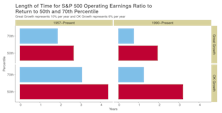
Things were bigger when you were a kid. Like that enormous sweatshirt your aunt gave you for your birthday or that hand-me-down ten-speed bike with the cross bar taller than your shoulders.
Estimating The Upside?

The remarkable stock market breadth and momentum chronicled in these pages doesn’t come without a price.
Kicking Off The Year... With A Good Year

During the first four trading days of 2018, the S&P 500 managed to match its 93-year average annual real price gain of +2.6%.
Value: Scarcer Than In 2000
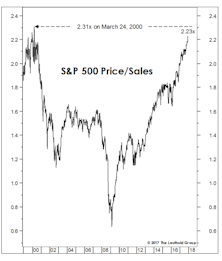
Comparing current valuations to March 2000 is unfair to March 2000. Any Value or Small Cap manager from that era can attest that values became more plentiful as the S&P ascended into its narrow peak.
Stock Market Observations

Economic and momentum considerations have kept us mostly aboard this bull for much longer than our value-seeking inner selves would have otherwise allowed.
Revisiting The Y2K Highs
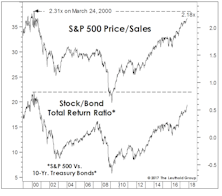
Bobby Knight thought coaching would be perfect “if it weren’t for those damned games.”
Long On Equities, Light On Conviction

In the wake of the tech wreck and the housing bust, usage of the term bubble by the media and market pundits has become increasingly liberal.
To Play The Rally, Or Not To Play?
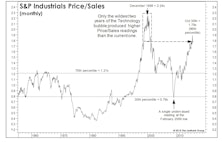
Question: What will you do if the Major Trend Index returns to its bullish zone?
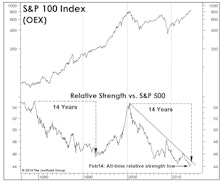
2013 Factor Performance Review

2013 ended up being a good year for quantitative strategies, particularly those that focus on using Momentum
Health Care's Top 20 Stocks

Highlight on the Health Care sector: Relative Valuations, Top Twenty Components, P/E Ratios, PSR, and Gross Profit Margins.
Perception for the Professional
March 2026 Issue

Featured Articles
Sector Navigator
March 2026 Issue