Consumer Confidence
Altitudes And Attitudes

Trend followers who use the ten-month moving average discipline finally had a positive month in July. But after the early-August decline, they are still holding an S&P 500 loss of 60 points from their latest trade initiated at the end of June.
Slowdown Or Recession? Confidence Is Key

The pattern of sharp sell-offs followed by equally sharp rallies continued in June. Most risky assets recouped nearly all the losses suffered in May, and then some.
It’s A Confidence Game

U.S. stock funds have seen heavy outflows despite the market’s YTD gains of 15-20%, once again reviving the tired characterization of this bull market as the “most hated in history.”
A Confidence Game
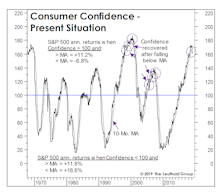
Several consumer confidence gauges plunged in the wake of the Q4 market decline (as expected), and then rebounded in a lagged response to the stock market recovery (again, as expected). But March saw the largest one-month drop in consumers’ assessment of their “Present Situation” since 2008.
The Cycle Is Over If Confidence Fades Further
 .jpg?fit=fillmax&w=222&bg=FFFFFF)
The “Expectations” component of the Consumer Confidence survey has been wobbly in the last few months, but the latest report, released on Tuesday, showed the first meaningful hit to consumers’ “Present Situation” since the stock market first began to struggle 14 months ago (Chart 1).
You Call That A Panic?
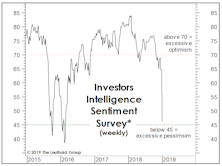
Christmas Eve came not with snowfall but a market freefall which was the worst-ever recorded for that date.
Tilt Toward Beta
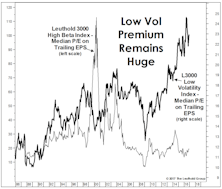
Stock market valuations certainly show no lack of investor confidence: each of our “Big Six” valuation measures now resides in either its ninth or tenth historical decile.
Plenty Of Love For The Rally

The less-well-known Stock Market Confidence survey from the Conference Board has poked into “excessively optimistic” territory for the first time since 2003
Safety In Numbers?

The S&P 500 closed the first week of January at a new cycle high, up 9.2% from the pre-election low made on November 4th.
“Changes In Attitudes, Changes In Latitudes”
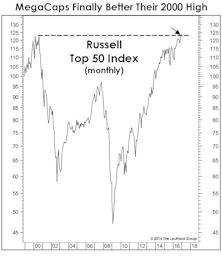
The above caption—and Jimmy Buffett song title—comes from the “View From The North Country” section in the first-ever Green Book published in November 1981. Not much has changed in 35 years.
Lack Of Confidence Has Been Greatly Exaggerated

While this 7 1/2-year bull market has failed to give rise to anything resembling the equity culture of the late 1990s, we think it’s a stretch to claim—as dozens of commentators over the past five years have—that this bull is “the most hated” in history.
Confidence & Stock Prices

Consumer Confidence shot to new cycle highs in March, closing within 6-7 points of the peak made shortly before the Great Recession.
Confidence & Stock Prices

We’re still bullish, but nonetheless feel a duty to take issue with some of the popular story-lines that have attended the past two years’ rising prices.
Stocks And The Economy

We’ve written before about retail investors’ tendency to “conflate” stock market action with movements in the underlying economy. Misunderstanding this interrelationship generally causes the public to liquidate stocks when the economy is weak, only to ultimately buy them back when the economic recovery is obvious to all.
Risk Aversion Edged Up - Stay Defensive And Be Patient

The Risk Aversion Index edged up during November. It is still on a “higher risk” signal. We will stay defensive and be patient. Higher quality assets within the fixed income space are favored.
Morose On Main Street… So Why Isn’t The Smart Money Worried?

Consumer confidence levels have sunk to five year lows. Could this be a bullish omen for the markets?
Jobs/Consumer Data Flashing Recessionary Signals

Optimists have continuously cited low unemployment and the ever resilient U.S. consumer as two “pillars of strength” that will help keep the economy afloat. It has become considerably more difficult to make this case in recent months, as jobs and spending data have weakened to levels associated with recessions.
Consumer Watch– Economic Data Weakening, Consumer Stocks Already Discounting A Slowdown

Our view that the consumer is due for a pullback has been bolstered in recent months, as Consumer Discretionary groups have continued to slip in our Group Selection (GS) Score rankings.
The Demise Of The Consumer

“Of Special Interest” section examines the likely demise of consumer spending power. Taking a lead from the GS Scores and other economic data, we believe that a significant underweight in areas that are particularly sensitive to consumer spending is a prudent strategy for now.
The Consumer: Still Chugging Along
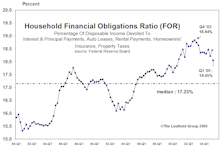
Consumer spending may have finally peaked in this cycle, but a consumer collapse is far from imminent. Consumers can be expected to remain supportive of economic growth.
Perception for the Professional
March 2026 Issue

Featured Articles
Sector Navigator
March 2026 Issue