10-Year
Limbo Rock!
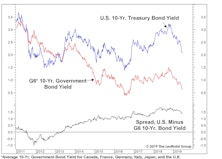
As global rates have taken a precipitous dive the last few months, it’s been hard not to hum “Limbo Rock.” And just like Chubby Checker, we’ve been asking our screens “How low can you go?” on a daily basis.
Same As It Ever Was?
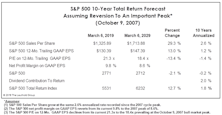
February’s Oscar win validated our efforts to make the ‘Green Book’ suitable for all audiences, like our decision to relegate “bottom-quartile” valuation outcomes to the very back of the publication.
The Market Is Off Its Meds!
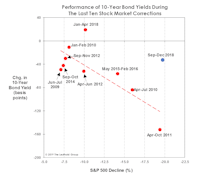
While investors obsess over the market level at which a hypothetical “Powell Put” might come into play (or whether such a put even exists), they seem to have overlooked the absence of another such put that proved dependable throughout the cyclical bull market.
“Unlevered” Treasuries Aren’t A Bubble
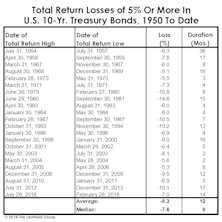
It’s been popular to argue that U.S. government bonds are a bubble while U.S. equities are not. But even if we agreed, the potential cyclical total return losses in Treasury bonds are a fraction of those likely to occur in an equity bear market.
What The Curve Does And Doesn’t Tell Us
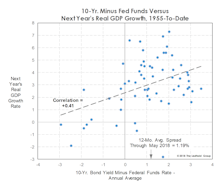
The gap between the 10-year Treasury yield and the federal funds rate has narrowed sharply in the last year but remains a long way (~110 basis points) from inverting.
A “Busted” Bond BUY Signal
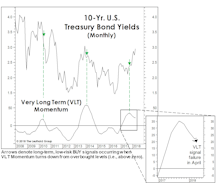
Last October our VLT algorithm recorded a bond BUY signal—one that we said, at the time, conflicted with our outlook.
The Bear Market No One Discusses
.jpg?fit=fillmax&w=222&bg=FFFFFF)
Yields on 10-year Treasury bonds have still not breached the 3.00% level that many believe will stick the proverbial “fork” in the secular bond bull market that began in 1981. That could well in happen in the next few weeks, but we believe it’s important to step away from the daily fray and reflect upon the damage that’s already been done.
A “Drug-Free” Market Decline?
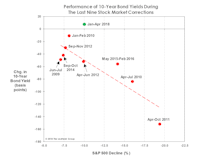
Yields on 10-year Treasuries are up 10 bps since stocks peaked in January, a clear break from the behavior of prior corrections. The last four stock declines of 10%+ were self-medicating—having been accompanied by bond yield declines of 50 to 150 basis points.
A Near-Perfect Model You Should Ignore
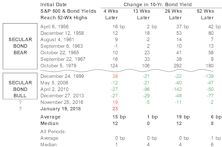
We somehow missed this signal in January, perhaps because we were pre-occupied with so many other signs of “climate change.”
1987 Parallels (Part 2)
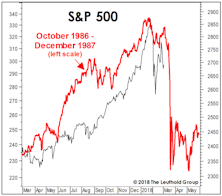
At the risk of yelling “fire” in a crowded theater, we present a few parallels between recent action and the year leading up to the October 1987 crash.
What Yield “Kills” The Secular Bond Bull?
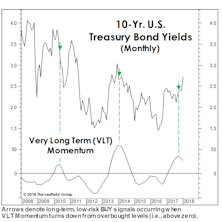
Bond market strategists remain hell bent on identifying the key yield level on 10-year Treasuries at which one can finally declare an end to the 1981-20XX secular bond bull market.
Will Rates Kill The Low Vol Mania?
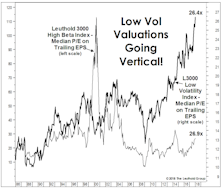
While there are many parallels between recent action and that of 1999-2000, stock market leadership is not one of them.
… Yet Another Bond BUY Signal?
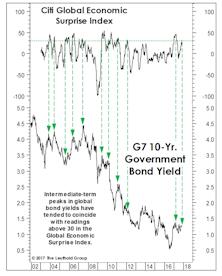
The implication from VLT Momentum is that bonds are sufficiently oversold (or, equivalently, that yields are sufficiently overbought) to trigger some degree of mean reversion over the next several months.
A Mysterious Bond BUY Signal…
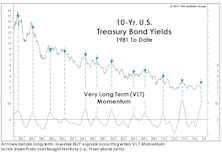
Sometimes we feel compelled to report findings that conflict with our outlook. And then there are the even rarer times we actually do it.
Bonds: No Pain, Yet No Gain
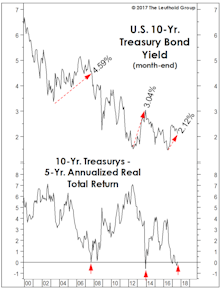
We find it remarkable that the five-year trailing real return on Treasurys has dropped to zero without investors having (yet) suffered any real pain.
Spoiler Alert! The Bond Bear Is Already Here...
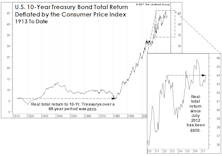
Bond investors residing in the Lower For Longer© camp no doubt feel vindicated by the summer rally that’s taken yields on 10-year Treasury bonds to as low as 2.06% in early September.
Stocks Versus Bonds: A Lonnngggg-Term View
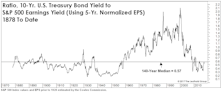
On a 50-year view, stocks do indeed look cheap relative to bonds. But the inclusion of 90 earlier years of data muddies the message.
“Teflon” Bonds—The Donald Trump Of Investments
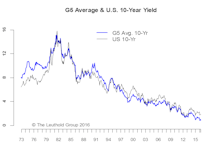
Throw anything at them and bonds can shake it off. The multi-decade march toward ever-lower yields seems unstoppable, not even by the zero line.
New Bond Market Record: G5 10-Year Average Hit All-Time Low
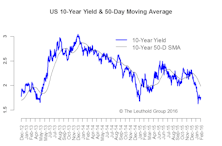
Despite the improvement in market sentiment, U.S. bond yields were dragged lower by their international counterparts.
A BUY Signal That Says SELL?
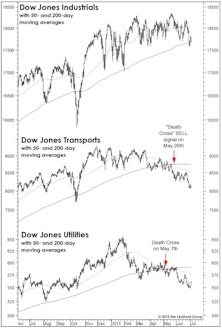
Last month we discussed the negative market implications of May’s “Death Cross” signals in the Dow Transports and Dow Utilities.
Perception for the Professional
March 2026 Issue

Featured Articles
Sector Navigator
March 2026 Issue